Teaching Backwards

I’m attending the Educause conference in Anaheim and listening to Gershenfield who taught a class called “How to Make (Almost) Anything” in which he asked students to come to class a build something. Student started the class with varying amounts of technical skill. He said the best time to get someone to “teach” something is when they first learn it. So, students who learned something that others’ needed to know would teach it over and over again, excitedly, because they were excited about what they had learned. At the end of the course, students had built projects.

What’s interesting about the conversation is the students learned as they needed-they didn’t start with a foundation of knowledge. Yet, they learned what they needed, and he used that methodology in places throughout the world. He asked the question whether MIT was obsolete. His answer: Not yet. Is that a question we should ask in education? And what can we do about it?

More information: Article How to Make (Almost) Anything (http://www.boston.com/news/globe/ideas/articles/2005/01/30/how_to_make_almost_anything/)

Sample class with the Fab Lab (http://fab.cba.mit.edu/classes/MIT/863.08/)

Learning (and Teaching) in the 21st Century

I belong to a reading group on campus that is reading Christopher Hedge’s Empire of Illusion (http://www.amazon.com/Empire-Illusion-Literacy-Triumph-Spectacle/dp/1568584377).

Thursday’s discussion focused in part on the differences in learning abilities now and what constitutes literacy. We discussed the public’s attendance at the Lincoln-Douglas debates to demonstrate the public’s literacy in the mid 1860s. That compared unfavorably with the nature and intellectual challenge of current political debates.  One participant in the discussion noted that the Lincoln-Douglas debates are difficult to read and understand now and this participant considers himself well-educated.

That analysis was interesting. My only comment was to wonder what percentage of people actually attended the debates and we didn’t have the answer. However, on reflection, I have another theory about it. What if the reason the debates were well attended was because that was the way most information was communicated? What if so much information was communicated orally that people who were literate were those who learned best by listening and analysis. If you consider Socrates’ oral tradition and his methods of challenging students to complicated verbal exchanges, it would make sense that those who learned best would be those who learn from listening.

To continue with that thought, what if in the 20th century, those who learn best are those who learn through reading? Those who became professors learned much through poring through books, making connections from that reading and flourished in that system. The oral lectures supplemented that learning, but perhaps we learn best from reading.

Now, we are teaching a generation of students who seem to focus best on “sound bytes” and quick flashes of visual information. Video games manage to attract individuals’ attention to “learn” how to master a game. And many individuals are motivated to follow through on video games enough to analyze a complicated game and develop a strategy to accomplish the goal.

So what does that mean for educators? As educators do we need to change how we change? How do we do that?  How do we get learners to maintain their curiosity about how life works? How to we get learners to develop that curiosity into a curiosity about multiple topics? How do we get learners to become as curious about learning as (many) are about videogames, social media sites and celebrities? That is our challenge.
Syllabus Redesign Conference-Day 1

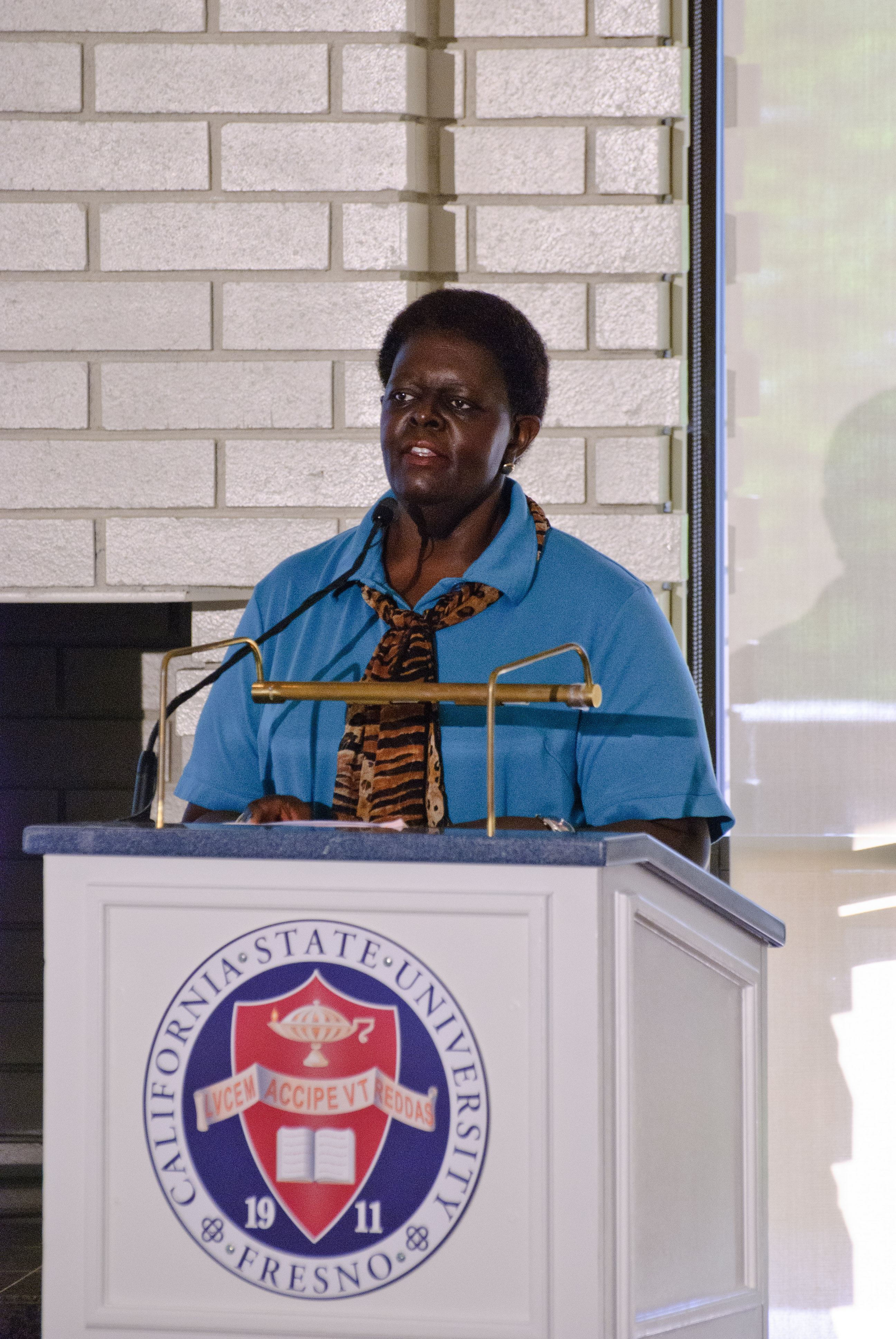
Syllabus Redesign Conference at Fresno State went well. Lots of participation. Good attendance. Participants seemed to be engaged and interested.Ida M. Jones

I learned more about writing learning outcomes and about how people learn. In an earlier post I talked about the idea of interspacing brought up by one presenter and talked about its relationship to generative learning concepts I learned about at UCLA. Deliberately creating difficulty in learning (without making it impossibly difficult) is also another concept that was interesting. Dr. Oswald from our school, explained that making learning somewhat difficult helps us learn, as contrasted to just performing (e.g. on a test).

How People Learn

So, when we have conferences, based on Dr. Oswald’s presentation on how people learn, we should split up presentations even for a couple of hours.

Dr. Oswald talked about the spacing effect and how to implement distributed practice. It is an interesting concepts and it fits with generative learning theories that I learned in the UCLA course on teaching. I cannot recall the instructor’s name now.

I wonder how similar it is to scaffolding. With scaffolding you’re repeating the info to build on it. But there isn’t the spacing that Dr. Oswald recommends. Learning how people learn is interesting….

Multi-tasking

According to the author of Learning to Teach Through Video we cannot process 3 different instructional mediums at the same time. Thus, a screen cast needs narration and picture or text and a picture, but not narration, text and a picture.

How does that affect our accessibility push? I guess it means that one section should be a base and the other sections should be optional. In other words, the picture (for example) would be the base and individuals can choose between narration and text.