It’s so interesting to take a class in a subject I haven’t taken in a looooooooong time (statistics).
I’m in a MOOC with 74,999 other students. I’ve used the Khan Academy videos on statistics to help me (and I’m just finishing week one!). I finished the video lectures and the first quiz (no score yet) and I’m working on the first assignment due tomorrow (Tuesday, 9/11). It’s taken me at least 4 hours so far.
Fun, yet daunting. I plan to finish, even if I have to pull a few all-nighters!
According to Kevin Carey, in the article Into the Future With MOOC’s in the Chronicle of Higher Education, MOOCs represent the future of education. He refers to his own experience in a mega-sized face to face economics course as evidence that mass-produced education is not new and that it can be more cost-efficient.
I agree, but only to a certain extent. MOOCs are useful, even for credit (although I’m not taking the stats course for credit). However, the structure of MOOCs must change to incorporate critical thinking and higher order skills. I think MOOCs are great for those of us who want access to learning…period. I want MOOC creators to keep expanding their subjects and use. For those who need more hands on and for those subjects that require more analysis, MOOCs will not work. Not yet. Not without a mass infusion of ….. je ne sais quois….a more in depth relationship among learners, instructors and the critical thinking skills/content.
How will I know whether I’ve learned from this MOOC? There are tests, assignments and (my goal) my increased comfort with and ability to read articles that include statistical analyses. And isn’t that truly what learning is about?
Chart Comparing Course Grades Spring 2012 to Spring 2011
The jury’s in. The verdict is: Twearning was modestly successful.
Twearning
Twearning is the use of Twitter in the classroom to promote student engagement and learning. In this post I explained how I had incorporated the use of Twitter in the Sports Marketing Law and Ethics class at my University. The class was composed of juniors and seniors at my university. It is a required course for the Sports Marketing major. Most students were Sports Marketing Major. The class was taught as a face-to-face class. The class had 18 students. One student was female; the remainder male. Students represented a variety of ethnic backgrounds.
Use of Twitter in this Course
Students were required to do several things:
Tweet one time during class and twice weekly outside class (15/315 points)
Provide group summaries of tweets for the previous week (15/315 points)
Follow tweets of 3 professional athletes and write a social media policy based on the information (50/315 points)
Student Reaction
The following are unedited student comments.
Best of Using Twitter
it helped me with my classmates easier. If I had a comment or curiosity, it was easy to get a response and the information i needed.
Seeing how it can be used both professionally and casually as well. As well as quick communication with a very wide
Classroom Clipart http://mbrs.classroomclipart.com/
variety of people.
Best thing was the social interaction in and out of the class. If someone needed to ask a quick question, they could easily send a tweet or direct message to someone and get a response back, fairly quickly.
Made me stay up to date with the course material, made sure that I was engaged during class time as well.
Following athletes (2 students)
That every chapter was summed up with the use of twitter and in our own words which helps us learn because most students can relate to the way we learn information.
That it made everyone post something about the course in their own words.
I got to communicate with my class mates and view the most popular topics and it helped me review and memorize course material
The best thing about using twitter was that it kept me active in the class and out of class.
learning new social media
I appreciated using twitter in class because it allowed us to read material and summarize what our findings. It also helped keep us up to date with a world of technology that is evolving very fast.
Worst of Using Twitter
It the hard was remembering to tweet all the time. it was not bad to use at all.
Sometimes the character limit. But that forced me to be concise.
Having to tweet twice outside of class was probably the worst thing. Students would wait till the last minute to tweet and it would consist of some random fact in the book. I feel that tweeting during in class is more effective.
It was another thing to have to remember to do outside of class, also finding the tweets of my classmates for the group summaries was time consuming.
Posting 2 tweets outside of class
Saving the tweets and having to read through them for possible legal issues.
On the learning aspect nothing was wrong, just making every tweet count and worth giving the right information.
It kind of became too much after using it over and over again
I did not have any problems
I have nothing bad to say about twitter. It was fun to use for class.
use was unrealistic
I found that using twitter sometimes took away from personal interaction with classmates and professor. However, it seems that technology is taking us that way everywhere we look.
Preliminary Conclusions
Student performance, as measured by exam results and course grades, was better. An implication from the exam results (noted in earlier posts) and the course grades was that students in the middle performed better. Students at the top tended to perform well no matter what the format. Note that I’ve only included raw, unedited student comments here. I have not yet conducted an analysis of the pre and post exam results nor have I compared the pre and post surveys of student perceptions of Twitter use and student engagement.
The following are first-blush comments. The student comments summarized here indicate:
It was a useful tool to communicate with each other
It was a useful method of learning by summarizing and seeing their classmates’ summaries of the material
Students liked least tweeting outside of class. That’s an interesting point because the students also seemed to find the summaries of those tweets one of the best things about using Twitter in this course. One thing which I noted in a previous
post, is that permitting students to use their laptops and, gasp, cell phones, did not hurt students’ performance in the class. This was contrary to what I expected when decided to, for the first time, drop the no cell phone rule.
This may seem like the end of the road. The exciting part is to conduct more analysis to determine what worked, what didn’t and why.
I’m considering this for one of my online classes in the fall; it may help foster more student engagement. Also, the withdrawal rates tend to be high in the particular class I’m thinking about and Twitter use might help reduce that rate. I’m also considering other uses.
This has been an interesting journey. More to come…..
Yet in higher education, we’ve been extremely slow to change. Holding to tradition can be beneficial, but educational institutions face a changing landscape that other institutions have faced. Medicine has changed with the advent of digital information. One study concluded that more than half the patients of a primary care internal medicine group used the internet for information, including information they did not share with their doctors (2002). The music industry has changed drastically; purchases of CDs has reduced y 50% with the advent of illegal file sharing and access to purchase individual songs. (See: Music’s Lost Decade) Yet in higher education we teach as though nothing has changed.
Lecturing has its benefits, but there are far more options available to teach. However, institutions and regulatory bodies do not make it easy to change. Classes are structured so that students are expected to spend 150 minutes per week “seat time” in their courses. Any changes to that structure require compliance with University regulations–and under faculty governance that means that the changes must be submitted to several faculty committees to be reviewed. At my institution, such changes generally take a year to progress through committees and sometimes longer. Clearly processes need to be changed to permit “pilots” or fast-paced changes.
In addition, the “a” word (assessment) requires that work must be evaluated to determine its effectiveness. Assessment can be complicated, since different factors may determine whether a technique has been effective. One factor is student effort-and that is difficult to measure. In addition, we tend to focus on short term (semester) but there can be long term implications that are not easily measured.
Why can’t we adopt a process that makes it easy for faculty to test new approaches, with a quick turnaround time and ample assistance to assess effectiveness?
Information on the web is free for anyone to use. That’s what I’ve heard students say from time to time. It is relatively easy to debunk that myth by discussing creator’s rights under copyright law.
What’s more challenging is helping faculty identify that same principle: we know there’s a a copyright law. We know there’s an exception to that law called fair use. What is more difficult is to determine whether our conduct fits within the definition of fair use.In the article Have College Professors Become Digital Pirates?, Andrew Chow, J.D., discusses this very issue. Universities and faculty have been sued for including copyrighted material in e-reserves, for copying videos from film to digital format (UCLA won that one) and for digitizing books. As the article notes, there are several factors courts consider in determining whether a use constitutes fair use, including the purpose and type of use, the amount of use and the potential impact copying would have on the market. Many Universities devote websites to assisting faculty (and students) determine fair use (see e.g. the Copyright Clearance Center’s Checklist).
This does raise a question I’ve raised before: shouldn’t copyright law be changed to address the new ways information is made available? Shouldn’t videos, as digital information, be priced differently? Should copyright law be changed to make it easier for educators to use copyrighted information in the interests of furthering knowledge? I consider it a great compliment if someone uses what I’ve created (it’s still a rare occurrence, though!). I would like acknowledgement, so others can find and use it, but feel no obligation to chase after someone who used what I created.
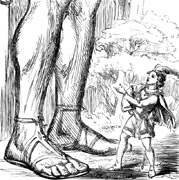
Would I feel differently if that someone was not an educator, but a corporation that made money from my work? Probably-I’d expect that corporation to provide me some compensation, that way we could both share in the profit made. More importantly, though, my work, my words, what I’ve developed, has not been developed in isolation. I have stood on the shoulders of giants to get where I am today. So, I am happy to share and help others learn.
Good news. Look at the chart! Twitter in the classroom seems to work; even with the more complicated materials. This chart shows that the spring 2012 grades lean toward As and Bs.
The second exam is more difficult than the first because it requires more application of concepts to scenarios and less of the basics. You can see from the chart that in Spring 2012 there were more As (2, instead of none in Spring 2011). There were an equal number of “Bs” in Spring 2011 and Spring 2012. There were more Cs in Spring 2012 then Spring 2011 (7, instead of 4 in Spring 2011) and fewer Ds and Fs. This result is consistent with the results of Exam 1.
So, what does this mean? Grades are one measure of determining whether learning has occurred. To the extent that exam scores improved over last year, I have evidence that using Twitter may have had an impact. As I noted in the earlier post, though, this result may not be terribly surprising in light of the fact that requiring Twitter required an extra review of the material (because students, in groups, had to summarize the weekly tweets and present those summaries to the class).
Then again, the fact that I permitted students to have their cell phones available during class demonstrates that, at least at this level, and at least with a small class, that it did not hurt overall class performance on exams. It is equivalent too, in the old days (when I was a student), to students reading a newspaper during class (some faculty permitted it, some didn’t) or passing notes to other students. Students are distracted, at least for that time, but it didn’t hurt their overall performance.
Keep tuning in: students must turn in ePortfolios and final projects later….












 Ida's Blog