I blog about education, technology and related issues. Here's my blog: https://idajones.wordpress.com/
I'm a student of life-teaching at a moderately-sized government owned educational institution. I love what I do and love learning!
Information on the web is free for anyone to use. That’s what I’ve heard students say from time to time. It is relatively easy to debunk that myth by discussing creator’s rights under copyright law.
What’s more challenging is helping faculty identify that same principle: we know there’s a a copyright law. We know there’s an exception to that law called fair use. What is more difficult is to determine whether our conduct fits within the definition of fair use.In the article Have College Professors Become Digital Pirates?, Andrew Chow, J.D., discusses this very issue. Universities and faculty have been sued for including copyrighted material in e-reserves, for copying videos from film to digital format (UCLA won that one) and for digitizing books. As the article notes, there are several factors courts consider in determining whether a use constitutes fair use, including the purpose and type of use, the amount of use and the potential impact copying would have on the market. Many Universities devote websites to assisting faculty (and students) determine fair use (see e.g. the Copyright Clearance Center’s Checklist).
This does raise a question I’ve raised before: shouldn’t copyright law be changed to address the new ways information is made available? Shouldn’t videos, as digital information, be priced differently? Should copyright law be changed to make it easier for educators to use copyrighted information in the interests of furthering knowledge? I consider it a great compliment if someone uses what I’ve created (it’s still a rare occurrence, though!). I would like acknowledgement, so others can find and use it, but feel no obligation to chase after someone who used what I created.
Would I feel differently if that someone was not an educator, but a corporation that made money from my work? Probably-I’d expect that corporation to provide me some compensation, that way we could both share in the profit made. More importantly, though, my work, my words, what I’ve developed, has not been developed in isolation. I have stood on the shoulders of giants to get where I am today. So, I am happy to share and help others learn.
Good news. Look at the chart! Twitter in the classroom seems to work; even with the more complicated materials. This chart shows that the spring 2012 grades lean toward As and Bs.
The second exam is more difficult than the first because it requires more application of concepts to scenarios and less of the basics. You can see from the chart that in Spring 2012 there were more As (2, instead of none in Spring 2011). There were an equal number of “Bs” in Spring 2011 and Spring 2012. There were more Cs in Spring 2012 then Spring 2011 (7, instead of 4 in Spring 2011) and fewer Ds and Fs. This result is consistent with the results of Exam 1.
So, what does this mean? Grades are one measure of determining whether learning has occurred. To the extent that exam scores improved over last year, I have evidence that using Twitter may have had an impact. As I noted in the earlier post, though, this result may not be terribly surprising in light of the fact that requiring Twitter required an extra review of the material (because students, in groups, had to summarize the weekly tweets and present those summaries to the class).
Then again, the fact that I permitted students to have their cell phones available during class demonstrates that, at least at this level, and at least with a small class, that it did not hurt overall class performance on exams. It is equivalent too, in the old days (when I was a student), to students reading a newspaper during class (some faculty permitted it, some didn’t) or passing notes to other students. Students are distracted, at least for that time, but it didn’t hurt their overall performance.
Keep tuning in: students must turn in ePortfolios and final projects later….
Information is everywhere and we should help students learn how to access and evaluate it. Education isn’t about going to school to get the information. Learning occurs with experiential activities, developing student activities and embracing failure as a way to learn.
I learned some concepts best when I answered them wrong on a test and got feedback quickly enough so that I could clearly follow where I went wrong. If we’re going to improve learning, as the video author states, we must refocus on how we encourage learning. Educators and institutions must re-evaluate the role of tests in promoting student learning and promoting cognition. Tests are not always the best way to foster improved learning. I believe tests are one tool, but there are many other tools to encourage authentic learning.
Because information is everywhere, we must also provide learners with the tools to evaluate information. The ALA defines information literacy as
“a set of abilities requiring individuals to “recognize when information is needed and have the ability to locate, evaluate, and use effectively the needed information.”
So students must know more than the textbook or teacher as the source of information, but instead must be able to read any source and conduct an analysis of the credibility of the content. Institutions must develop methods to encourage the pedagogy of authenticity and of failure in order to learn. I’ve discussed the benefits of failure to improve learning in this post. I’ve discussed the need to teach information literacy in this post.
I’d love to implement and assess some version of this. That’s my next project, possibly, after I finish the Twitter and ePortfolio activities.
Digital information everywhere. Digital books. Digital images. Digital videos. Digital…but not in the academy. In the academy we still place extraordinary attention to print media as the basis for tenure and promotion. We ignore the digital revolution that has occurred all around us.
Instead, the structures of universities often fail to reward and champion digital innovators, particularly in guidelines for promotion and authorship that privilege traditional scholarship.
If we do not create mechanisms that reward faculty and students who form digital-research communities, then innovation may bypass universities entirely, putting us at risk of falling behind institutes, private companies, and even individuals.
Randolph Hall, Vice President for Research at USC, made this point in a recent article titled Scholarship, Liberated from Paper at Last in the Chronicle of Higher Education. He notes that after discussion with faculty at his institution, the faculty agreed to include revise the process for tenure and promotion to include recognition of the value of a faculty member’s digital research.
Change occurs slowly in academic institutions. I’ve made that point in other posts. You would think academia would be at the forefront of forging new directions and new research areas. You would think that academia would be the first to devise new ways of thinking about how people learn and in fostering an environment of analyzing tradition and also challenging tradition. If you thought that, you would be wrong. Academia is tied down to traditional methods despite the progress in the rest of society. For example, information forwarded for academic tenure and review at my university is still wedded to paper documents. The process includes, for example, instructions on how the faculty member should label his or her [paper] binder. So, even though all the documents are created electronically, they must be converted to paper for the review. ePortfolios (see .e.g. Trent Babson’s ePortfolio links) or programs like LiveBinder could allow for that same information to be provided in electronic form.
Why are academic institutions wedded to paper? Paper is perceived as more permanent; however there are ways to preserve electronic documents. And if the courts permit electronic filing of documents (see e.g. e-filing of electronic briefs) where finances and other matters are at stake, then our University should recognize the value of electronic documents. Also, if the concern is the rigor of the scholarship, public exposure and peer review can help to increase rigor. Research that is available to the public helps to promote additional learning for the public and for the researcher. It could also lead to additional research and creative use of that research.
So, as noted in the Hall article, academia must recognize the value of digital research. Hall notes that Universities like Harvard have created ways to disseminate research to the public more quickly so that others can read and comment on it. My own experience in posting on SlideShare and on this blog has allowed me to present research findings, (e.g. results of using Twitter in the classroom) to many others. I have had 80 views on a presentation on plagiarism-far more than attended the actual presentation. And with more exposure, I have more opportunity to learn more, test my research and work to make it better. That’s much more exposure than posting the article in a paper journal that requires that people go to a physical library to access it.
Cheating to win seems to start early. It seems to be part of U.S. culture to “win at all costs” and that you measure success only by the size of the wallet. It’s not hard to imagine those students participating in a bounty system. Even if the student didn’t initiative it, that student would participate without question.
I’m using Twitter in my class this semester. This class is composed of 18 students taking a required course in the Ethical and Regulatory Environment of Sports Marketing. Students range from second semester juniors to graduating seniors. Students must use Twitter to post tweets during class, post two tweets about course content (textbook readings or current events) outside class and prepare group reports summarizing the weekly tweets and present those summaries in class. This means, that during the class, students have laptops, smart phones and other electronic devices open during class.
I haven’t analyzed the data on the number of tweets per week, but my estimate is an average of nearly 50 tweets total each week (some students forget). I’ve found that the weekly summaries are good reinforcements and these summarizes also give me the opportunity to correct any misconceptions that arise from the tweets.
After completing the full exam, I’m now comparing the results this semester to the results last spring for this course. The following is the chart comparing the grade distribution.
The results remain positive.
Grade distribution
There was a larger number of As and Bs in the Spring 2012 course (10/18 or 56%) compared to the Spring 2011 course (5/18 or 23%). Interestingly, the number of Ds and Fs remained the same. The shift in grades was in the number of Cs: down from 33.3% in Spring 2011 to 16.5% in Spring 2012. There was a greater percentage of As in the Spring 2012 class (an increase of 400%).
Interpretation of results
These are small classes so although these results are promising, this doesn’t mean they can be translated to larger courses.
It appears that the use of Twitter in this way fostered student active engagement (I conducted a pre-survey and I’ll conduct a post-survey on engagement to determine whether that the students felt that Twitter use improved engagement with the course and the material.). Twitter use apparently fostered more focus on the course material-students were actually engaged in taking notes in class (at least to send the tweet during class and then the two tweets outside of class) and reviewing the material (at least when the groups submitted and presented the group summary). That fits with more traditional theories on learning that the more you engage with the material, the more you will remember.
A portion of the exam was answers to essay questions. I graded those answers anonymously, but I could have been biased toward students doing well.
One interesting conclusion from this small amount of data was that use of laptops & cell phones in class didn’t decrease performance. Even if Twitter use wasn’t the cause of the increase in As and Bs, it doesn’t appear that it had a negative impact on performance. Because this was a small class, and because I typically walk around when I teach, it may be that students were more careful about using the laptops and phones appropriately than in another, larger class.
There are undoubtedly other, better measures to assess impact-I’m using a a simple one. Behavior analysis through using observers who rate behavior, would probably be more accurate in addition to the exam results, but this is the beginning of this journey, not the end, so stay tuned!
At California State University, Fresno, one of the primary types of cheating is plagiarism. I’ve discussed that issue in this post (and others). Plagiarism has serious consequences-students do not so their own work and thus faculty cannot evaluate the work. Plagiarism is undoubtedly part of the reason students fail to leave the University as educated citizens. If the students are not doing the work (and this post summarizes some of students’ study habits as reported by the students), then it’s no surprise they graduate unprepared.
Arizona University’s findings are consistent with the findings we’ve made at our University. At Fresno State a colleague, Judith Scott, and I, have offered workshops to inform students about the definition of plagiarism and how to avoid it. We’ve done that for nearly seven years. The workshops have been very popular with students and faculty. Each year, approximately 2000 students attend the workshops and faculty from every school and a variety of departments require that students attend. We offer an online version and are studying the impact of that version, but many faculty and students prefer the 50-minute face-to-face version of the workshop.With funding cuts, however, it may be that the workshops will no longer be offered.
As a society, the educational institutions in this country have failed to teach students that integrity matters and that getting an education is more than just checking a box and receiving a diploma. In this post, I discuss the NFL’s latest cheating scandal and recommend relatively harsh penalties. Sports are a multi-billion dollar business; the ethical standards should be higher so that fans, like me, can enjoy watching fair competition.
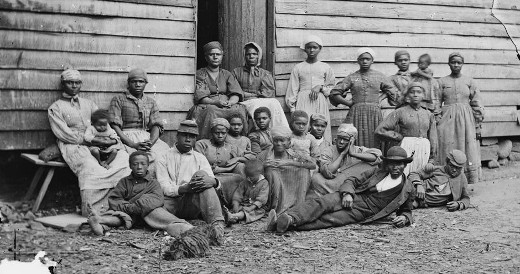
We (African Americans especially) sometimes forget the strength of our ancestors to survive slavery. This letter by a former slave is a reminder that hard work, perseverance, pride, tenacity, integrity and a measure of forgiveness can lead to success.
Descendents of the Anderson family have much to be proud about. Be sure to click on the link in the article to find out more about the family tree.
[Sometimes, I find something so interesting that I discuss it in my blog, even though it’s not directly related to teaching. Then again, I teach sports marketing law, so arguably this article fits into all those categories!]
To Cheat or Not To Cheat: Apparently That’s Not a Question
As football fans, we’ve heard rumors that this happens: that players are paid a bonus for knocking other players out of the game.
I’ve always believed that that’s what happened to Rich Gannon, former quarterback for the Raiders. His “attacker” nicknamed “Goose” at the time, is now a commentator for FOX Sports. Pleasant enough, but I still look askance at him every time I see and hear one of his reports. Each time I hear Goose, I mean Tony, report, I wonder how much he was paid to land Gannon’s game- (and career-) ending injury. And to top it all off, Gannon’s injury was the beginning of a long, dry spell filled with a vast number of losses. Diehard Raiders fans know what I mean.
So, now a new story breaks. The story is that many players and teams had bounties paid for knocking out opponents. According to the linked article and other sources, the Saint’s defensive players set up a pool that paid a bounty depending on whether the player was knocked out ($1500) or carted off ($1000). Apparently the Redskins, Bills and Titans [and perhaps the 2001 Ravens-the team for which Goose played when….well you know!) had similar schemes. Mind you, none of those teams in this paragraph [except the 2001 Ravens] have won a Superbowl in, well, forever. Maybe that’s why they may have participated in this scheme. In the other hand, the Saints won a Superbowl recently, so maybe they participated in desperation to win again, soon and not fall into the post-Superbowl slump.
Football is a rough sport. That’s the fun of it for the fans (and I assume for the players). I am softie and completely pain averse-I don’t like causing or being the recipient of painful…anything. Yet on Sundays I’m there with other Raiders fans (who are not known for their kindness or tolerance) wanting to see players play their hardest. And hopefully win.
But this is different.
There’s winning according to the rules of the game and winning at all costs. A team could win a game by shooting the players of the opposing team.
A team and its players could increase its chances of winning by putting rocks in their gloves or elbow pads or knee pads and tackling hard. A team could increase its chances of winning by bribing a referee (Oh, wait a minute, that’s basketball!). A team could increase its chances of winning by videotaping opposing teams’ hand signals (that’s football, and Superbowl winners, too). Winning at all costs is NOT what I want to see. I want to see a fairly fought contest that results in the “better” team winning.
Legal Issues
Assault-almost but not quite touchingBattery-touching
But the legal issue is whether these kinds of hits, motivated by receiving a bounty, constitute hits outside the rules of the game. Are these hits are so far outside the rules that the perpetrators should face criminal and civil liability? In the examples I gave earlier: shooting players, placing rocks in their gloves and pads, it’s easy to say that there should be criminal and civil liability to the perpetrators.
The conduct in the examples is so far outside the rules that it is easy to argue that there should be liability: that the perpetrators should be prosecuted and face jail time AND that the perpetrators should face civil (tort) liability and pay damages, including punitive damages, to the victims.
But what about the conduct in the current scandal? Does the additional motive (receiving the bonus) mean that the players who participated should face criminal liability? Or should they face civil liability? Or both? Or neither?
This is my take.
Remedies Against the Players
No jail time. The additional incentive is barely distinguishable from other incentives: players’ regular pay, additional pay for reaching the playoffs and the Superbowl. In 2009, Players’ median salary ranges from a low of nearly $540,000. $1500 is less than 1% of their salaries or $150 if your salary is $54000 per year. Motive is not an element of a crime, but prosecutors’ often look at motive to convince juries that a person’s conduct was unacceptable.
Payment of Damages.Yes, the players’ involved should have to pay civil damages (not just a NFL fine) that include payment of all medical expenses (to the insurance companies if appropriate), lost wages and pain and suffering. And those players should have to pay punitive damages. I’d recommend a set multiplier, e.g. 10 times the compensatory damages.
Ejection from the league.Yes, those players who caused more serious damage that resulted in a player not being able to play again. [Maybe this is my Gannon-revenge rearing its head again.] I would argue an “eye for an eye” but the idea is that if the activity had that consequence, players should be liable for it.
Remedies Against the Teams
Let’s buttress the fines that teams pay so that it hurts them to engage in this conduct. No slap on the wrist and a new, lucrative coaching contract for breaking the rules. Remove teams from the playoffs if the team has more than 2 players who participated and the victims were carted off or knocked out. Remove their playoff wins if the team has more than 4 or 5 players who participated and the victims were carted off or knocked out.
Make the price for the team so high that the team owners, coaches and players don’t engage in this kind of conduct.

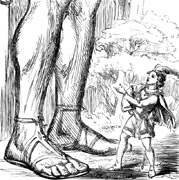 expect that corporation to provide me some compensation, that way we could both share in the profit made. More importantly, though, my work, my words, what I’ve developed, has not been developed in isolation. I have stood on the shoulders of giants to get where I am today. So, I am happy to share and help others learn.










 Ida's Blog
